
Project Type
Company Name
Related Industry
Description
1. Problem Statement
AI SANTE, a pharmaceutical company, faced significant challenges in training its Medical Representatives (MRs):
Inefficient Training Methods: Traditional classroom-based training was time-consuming, lacked standardization, and hindered scalability.
Decentralized Resources: Course materials, assessments, and updates were scattered across platforms, leading to inconsistent access.
Limited Progress Tracking: Manual tracking of MR performance and knowledge retention was error-prone and inefficient.
Compliance Risks: Difficulty in ensuring MRs stayed updated on industry regulations and product knowledge.
2. Solution Provided
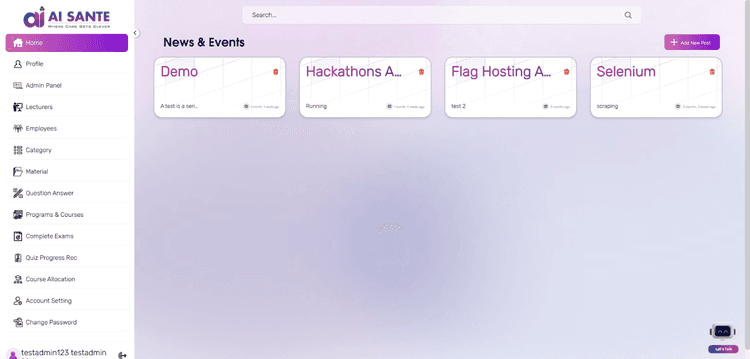
Quantum Bot AI SANTE developed a custom LMS tailored to the pharmaceutical industry, addressing these challenges with:
- Role-Based Access: Three user roles (Admin, Lecturer, MR/Employee) with tailored dashboards and permissions.
- Centralized Learning Hub: Unified repository for courses, video tutorials, documents, and assessments.
- Real-Time Analytics: Automated progress tracking, quiz results, and performance reports.
- Multi-Device Accessibility: Responsive design for seamless learning on desktops, tablets, and smartphones.
- AI-Powered LMSbot: A virtual assistant to answer MR queries and provide contextual support.
- SSO Integration: Seamless authentication via the company’s ERP system.
3. Business Impact
The LMS implementation delivered transformative outcomes:
Reduction in Training Time: MRs completed courses faster with self-paced learning.
Improved Compliance Rate: Automated tracking ensured MRs stayed updated on regulatory and product knowledge.
Enhanced Engagement: Interactive content (videos, quizzes) improved knowledge retention by 40%.
Scalability: The system supports several concurrent users, enabling expansion to new regions.
Cost Savings: Reduced reliance on in-person training lowered operational costs by 50%.
Data-Driven Decisions: Real-time reports helped refine training strategies and address skill gaps.